
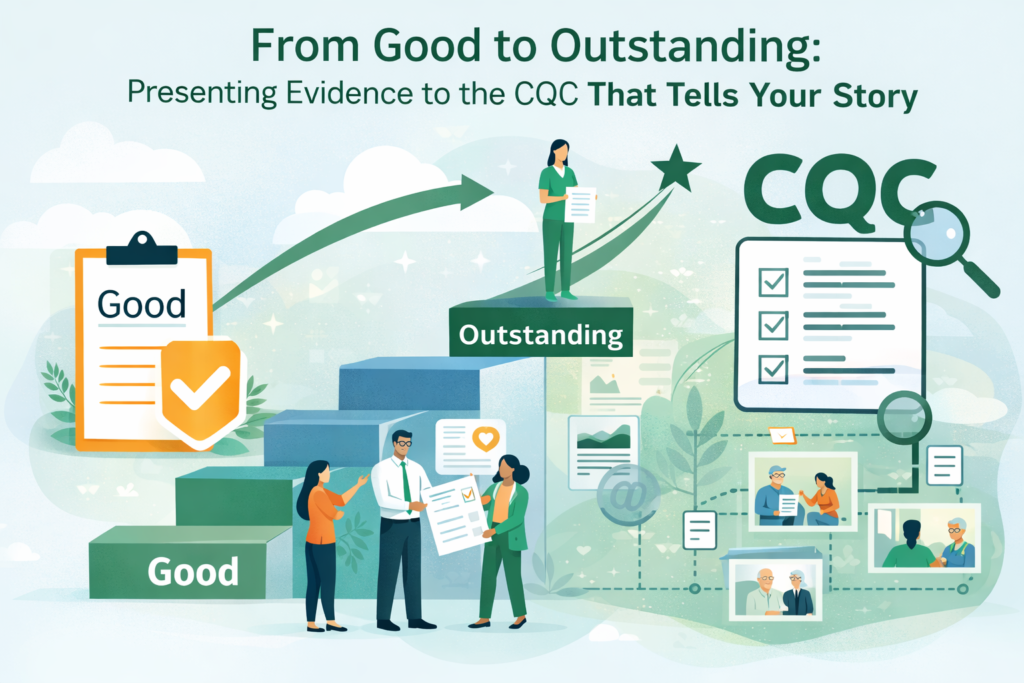
The Outstanding Society (The OS) began 2026 with an energising webinar focused on a challenge many providers recognise: how to present evidence to the CQC that clearly demonstrates not just compliance, but impact. Hosted by Ruth French (OS Director of Policy & Regulation), the session brought together Outstanding Society directors, guest speaker Sarah Slater (Home Instead Rugby), and Rob Hargreaves (Skills for Care), with hundreds of attendees joining live.
Ruth opened by acknowledging the current inspection landscape and how difficult it can feel to achieve Outstanding, particularly when inspections are less frequent, and the bar appears higher—especially in the Safe domain. The message was reassuring and practical: outstanding is still achievable, and success comes from capturing and communicating what you do well, consistently.


A key theme throughout the webinar was making evidence gathering simple and inclusive. Samantha Crawley shared how her teams use the phrase “Tell us a story” to capture strong evidence without making it feel overly formal.
Staff across the service submit short examples describing what was happening, what they did, and what changed as a result. These stories become powerful case studies for families, learning, and inspection—supported by data that shows how information is analysed and turned into action through governance.
Lara Bywater added practical ideas for capturing outcomes when people don’t communicate verbally, including photo timelines and personalised communication tools, while Sanjay Dhrona highlighted the importance of language and culture—encouraging teams to “Prove it” by showing how quality statements are lived every day, not just written down.
Crucially, speakers stressed that evidence should come from everyone: care teams, kitchen, housekeeping, maintenance, and office staff.
In domiciliary care, Sarah Slater shared learning from achieving three consecutive Outstanding ratings. Her advice was clear: be open, transparent, and responsive—inspectors know issues occur; what matters is how you learn and improve. She emphasised making the “voice of the person” visible through structured examples, professional feedback, and (where appropriate) storytelling through real-life outcomes.
The webinar closed with a reminder that outstanding doesn’t have to be expensive: many high-impact improvements are low-cost, rooted in communication, reflection, and meaningful evidence. Upcoming joint sessions with Skills for Care will explore how strong regulation compliance builds confidence—whatever changes the CQC framework may bring.
Watch the meeting below:
Your Comments:
Downloads:

MEETING SLIDES – Download here.
Links posted in the chat during the meeting:
Click Here to Join the OS – it’s free and open to all.

Find out more about the Out Standing Diversity Forum’s Language Guide

To complement this webinar, a very practical webinar recording from Skills for Care covered building confidence of those being interviewed in CQC assessments, ensuring that your team members could share great evidence in inspector interviews. It’s called “Providing impactful feedback to the CQC“

To find out more about the VIVALDI Social Care or to join in with the research please visit here. If you have any questions please email: info@vivaldisocialcare.co.uk
If you are a nurse or have a nurses / Nursing associates, students in your organisation and want to get involved with these councils, please contact Sonia at Admin.SCNAC@theoutstandingsociety.co.uk
A great network and voice for the sector.
They are currently generating clinical competencies for nurses in adult social care and developing a dedicated safeguarding platform for social care on the NHS Futures platform to enable us to have equity of access with our NHS colleagues.
Please do get involved and join your regional council! Celebrating the Voices of Care: Parliamentary Reception Calls for Bold Action to Secure Future of S…

Chief Nurse Adult Socia Care Award: Nominations
Skills for Care upcoming Webinar: Navigating the CQC regulations: Building confidence in what you will need to evidence
