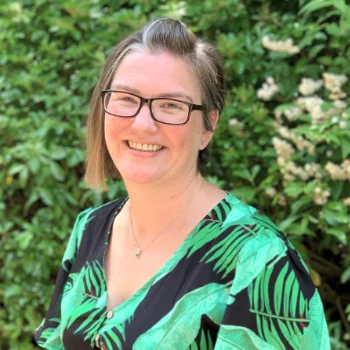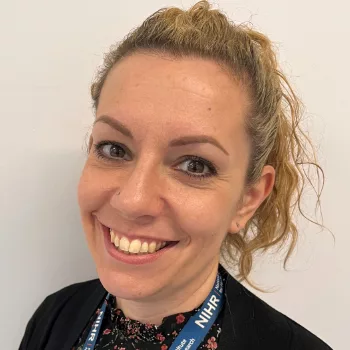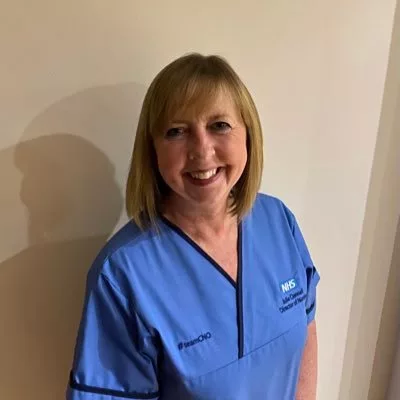

By: Helena Kerkham, NIHR Research Delivery Network Programme Lead for Residential Settings
When I arrived at Cedar Lodge Care Home in Whitchurch-upon-Thames, I wasn’t prepared for how it would make me feel.
I knew the plan for the day: meet colleagues at the Outstanding Society in person, learn more about their connection with the Vivaldi study, and then an opportunity to connect with other colleagues at NIHR and NHS England. As someone still relatively new to the NIHR with an NHS background, I was hopeful to add to my growing knowledge of the sector and how research adds to the picture.
Cedar Lodge Care Home is lovely – bright, warm, in a grade 2 listed building with a protected stained glass window in the beautiful Berkshire rolling countryside. Inside I had the chance to learn more about the Vivaldi Study, its origins during the COVID-19 pandemic reducing infections in care homes, and how this has expanded since to include multiple diseases. I was particularly interested in how the project is building the infrastructure to flow data consistently from onboarded care homes into a central database, which will do a lot to improve health surveillance and responsiveness to new outbreaks in what is, from an infection perspective, a higher risk setting.
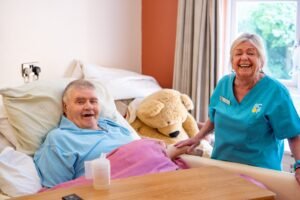
So I got what I expected. I learned a lot and got to meet some friendly and interesting people. What I didn’t expect was how intensely it affected me. I really felt the warmth and brightness of the building, and the friendliness of the residents and the staff. I felt a sense of relief that I didn’t really understand at the time – and the inspiration and optimism I took from the Vivaldi presentation fuelled me for weeks afterward.
Part of this, of course, is because meeting happy residents with their lovely dog in a beautiful building, and getting to discuss work you’re passionate about with colleagues who share that passion, is bound to leave a smile on your face. But it was more than that. As I reflected on it later, I realised it was the first time I had stepped foot in a care home since the pandemic. I had subconsciously been braced for something like what I’d experienced before, which was a lot less warm, bright, and open.
A bit of context: I worked in the COVID-19 vaccination programme in primary care during the pandemic. My memories of the first 6 months of 2021 are a blur of 12 hour pop-up vaccination sites, army medics vaccinating on lawns, and endless spreadsheets of vulnerable older people needing protection in some of the most deprived neighbourhoods in the country. A lot of that work was in care homes.
I remember the mask fogging my glasses, the chemical-sweet smell of disinfectant; I remember hand sanitizer and distance protocols and constant testing that led to a paranoia that, for all my good intentions, I could unknowingly be carrying a deadly illness wherever I also remember the silence in rooms meant to be filled with conversation, now emptied for fear of infection lurking behind every corner, and how hard I had to work to make sure a smile came through in my voice, because no one could see it behind the PPIE.
Despite working nowhere near research, its importance could be felt everywhere. Research carried all our hopes for an end to lockdowns and shielding and isolation. And not just vaccine research – research on infection control, on antivirals, on disinfectants, and on long-term treatments. A lot of that research happened in care homes.
I will also never forget the joy and relief of the first wave of vaccinations; patients in their late 80s and 90s queuing in the cold January evening with massive smiles on their faces because they were outside, they were chatting to neighbours and friendly strangers, they had a hot cup of tea in their hands and everything was finally going to be okay, because there was a vaccine at the end of that queue. A vaccine that wouldn’t just potentially save their life, but give them their life back.
That was because of research. Research carried out with participants like them; research designed to rescue them.
All of this to say, walking through Whitchurch-upon-Thames on a somewhat rainy September day, it was an absolute pleasure to walk into a warm, bright, open care home and be immediately greeted by a couple of new residents who were sitting in the foyer with their big chocolate labrador, and who wanted nothing more than to chat about how beautiful their dog was (and she was extremely beautiful). What a blessing to be able to update my internal sense of what ‘care home’ means from pandemic darkness to Cedar Lodge.
It filled me with that same optimism from the January 2021 vaccine queue to meet people who worked to create this freedom, who won it back from the pandemic, and who continue to work just as hard today to make sure that, should it ever happen again, researchers will be ready.